Uncategorized · 27 November 2026
One Button-Up Shirt, Five Outfits: Casual, Office, and Evening Options
The quick answer
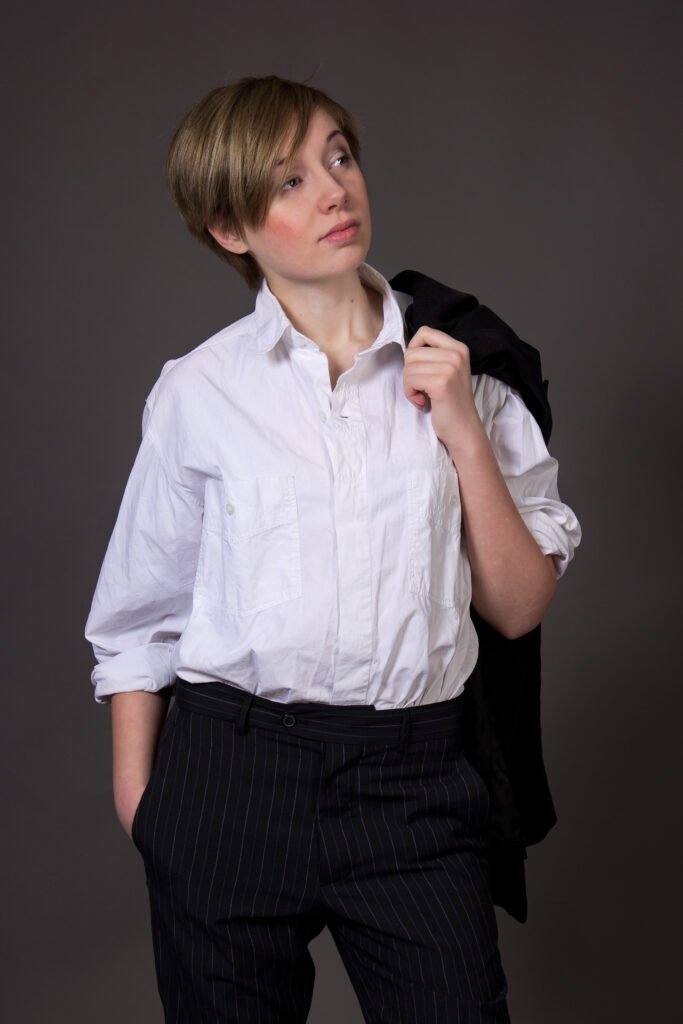
To wear one button-up shirt in different settings, change the bottoms and shoes first, then adjust the hem, sleeves and accessories. Try it untucked with jeans, open over a tank, tucked into office trousers, paired with a skirt, or finished with dark trousers for dinner. Every formula below includes a flat-shoe option. Use whichever pieces you already own; these are combinations to try, not a shopping list.
1. Start with your shirt’s fit and feel
Choose a button-up you can comfortably wear while sitting, reaching forward and bending. Check it fastened as well as open: if the front pulls between buttons, try the open-layer outfit rather than forcing it to work as a closed shirt.
For this guide, start with either:
- A crisp cotton shirt: Try this when you want a more defined collar, visible cuffs or a deliberately loose outline.
- A softer, draping shirt: Try this when you prefer fabric that falls closer to the body or folds gently over a waistband.
These are descriptions of how your particular shirt behaves, not rules about every fiber. For example, Eileen Fisher describes its Washed Organic Cotton Poplin Classic Collar Shirt as both crisp and light and draping—useful evidence that “cotton” does not automatically mean stiff. (eileenfisher.com)
Likewise, a softer shirt need not be shiny. The manufacturer describes its Silk Georgette Crepe Classic Collar Shirt as fluid with a subtly textured, matte surface. Neither example is a required purchase; look for comparable behavior in the shirt you own. (eileenfisher.com)
Before choosing an outfit, try three hem positions in the mirror: fully untucked, a small front tuck and a full tuck. Keep the version that feels comfortable and gives you an outline you enjoy.
2. Outfit one: an untucked shirt, jeans and everyday flats
Try this formula: Button-up shirt + straight-leg jeans + sneakers or flat ankle boots + an everyday bag.
Start with the shirt untucked and the sleeves down. This is the simplest version: no belt, jewelry or special folding required.
For a more relaxed variation, unfasten the cuffs and fold them back once. If you prefer to see the jeans’ waistband, tuck only the center front of the shirt, leaving the sides and back loose.
With crisp cotton: Try a loose, untucked shape over straight jeans. If the shirt feels too wide for your taste, use the small front tuck rather than tightening the whole outfit.
With a softer shirt: Leave it untucked and check where the hem settles. If it catches on a pocket or bunches at the waistband, compare it with a full tuck.
Choose footwear for the day you actually have. Sneakers make sense for a walking-heavy plan; flat boots are another option when you want more coverage. A crossbody bag keeps the accessories straightforward.
Practical check: Sit down, then stand up without adjusting anything. If the front tuck has disappeared or the back hem feels awkward, wear it fully untucked. A styling detail is optional if it needs constant maintenance.
3. Outfit two: an open shirt over a tank or T-shirt
Try this formula: Open button-up + tank or close-fitting T-shirt + jeans or casual trousers + sneakers or flat sandals.
Use the same jeans as outfit one if you like. The change is in the shirt: unbutton it completely and treat it as a light outer layer.
Choose an underneath top you are happy to wear on its own. Tuck that top if you want a visible waistband, or leave both layers untucked for a looser combination.
With crisp cotton: Try leaving the collar in its natural position and folding the cuffs back. Let the shirt provide the shape rather than adding several more layers.
With a softer shirt: Let the fronts hang freely. Check them while walking and sitting, especially if the shirt is long.
For accessories, start with just a watch, small earrings or your usual bag. You can add more, but you do not need to replace every element to make this a different outfit.
Practical check: Put on your bag and move your arms. If the shirt bunches beneath the strap, smooth it once and test again. If it keeps happening, try a different bag position or return to the buttoned version.
4. Outfit three: a buttoned shirt, office trousers and loafers
Try this formula: Button-up + tailored trousers + loafers or closed-toe flats + optional blazer or cardigan.
For an office outfit, establish the dress code before deciding whether denim or sneakers belong. Published guidance is not uniform: UC Davis’s Washington Program excludes jeans from its business-casual examples, while Colorado State University’s business school career guide includes a blazer with dark-wash jeans. Your employer’s expectations take priority over either example. (washingtonprogram.ucdavis.edu)
Where trousers and a collared shirt fit the workplace, start there.
For a full tuck, fasten the shirt, tuck it evenly, then raise and lower your arms. Gently release enough fabric above the waistband to reach forward without feeling anchored in place. Add a belt only if it serves the fit or gives you a finish you like.
For an untucked alternative, try the shirt over straight trousers. Look at it from the side and back, then add your work layer. Compare the combination with and without the blazer or cardigan rather than assuming a tuck is essential.
With crisp cotton: Try the cuffs fastened and the collar lying naturally.
With a softer shirt: Try a full tuck with a little ease above the waistband.
Closed-toe flats are included in both universities’ business-casual guidance, so heels are not necessary to follow those examples. Check any additional footwear requirements at your workplace. (washingtonprogram.ucdavis.edu)
Practical check: Sit as you would at your desk and reach toward an imaginary keyboard. Reconsider any tuck, cuff or layer that restricts that movement.
5. Outfit four: a shirt, skirt and comfortable flats
Try this formula: Button-up + a skirt you already wear + ballet flats, loafers or flat boots + one optional accessory.
Start with a familiar skirt rather than buying one for the shirt. A straight, A-line or fuller skirt can all be starting points; the useful question is how the two specific garments sit together.
Try a full tuck first, then compare it with the shirt untucked.
With crisp cotton: If the full tuck creates more bulk than you want, leave it out or tuck only the center front. Avoid forcing the side seams into a tight waistband.
With a softer shirt: Try a full tuck with a gentle fold of fabric above the waist. If you prefer coverage over the waistband, leave it loose.
There is no requirement to define your waist. An untucked shirt over a skirt is a valid finished outfit if you like the shape and can move comfortably.
Choose one accessory to begin: earrings, a scarf or a belt. If you use a belt over the shirt, test sitting down before committing to it.
Practical check: Walk, turn and sit. Look for a twisting waistband, shirt fabric gathering inside the skirt, or a hem you keep pulling into place. Change one element at a time so you can tell what solves the problem.
6. Outfit five: dark trousers, a shirt and an evening detail
Try this formula: Button-up + dark trousers + dressier flats or boots + earrings or a necklace + an evening-appropriate bag.
You can reuse the office trousers and shoes. For this version, try removing the work layer, adjusting the neckline within your comfort level, and choosing one accessory as the focus.
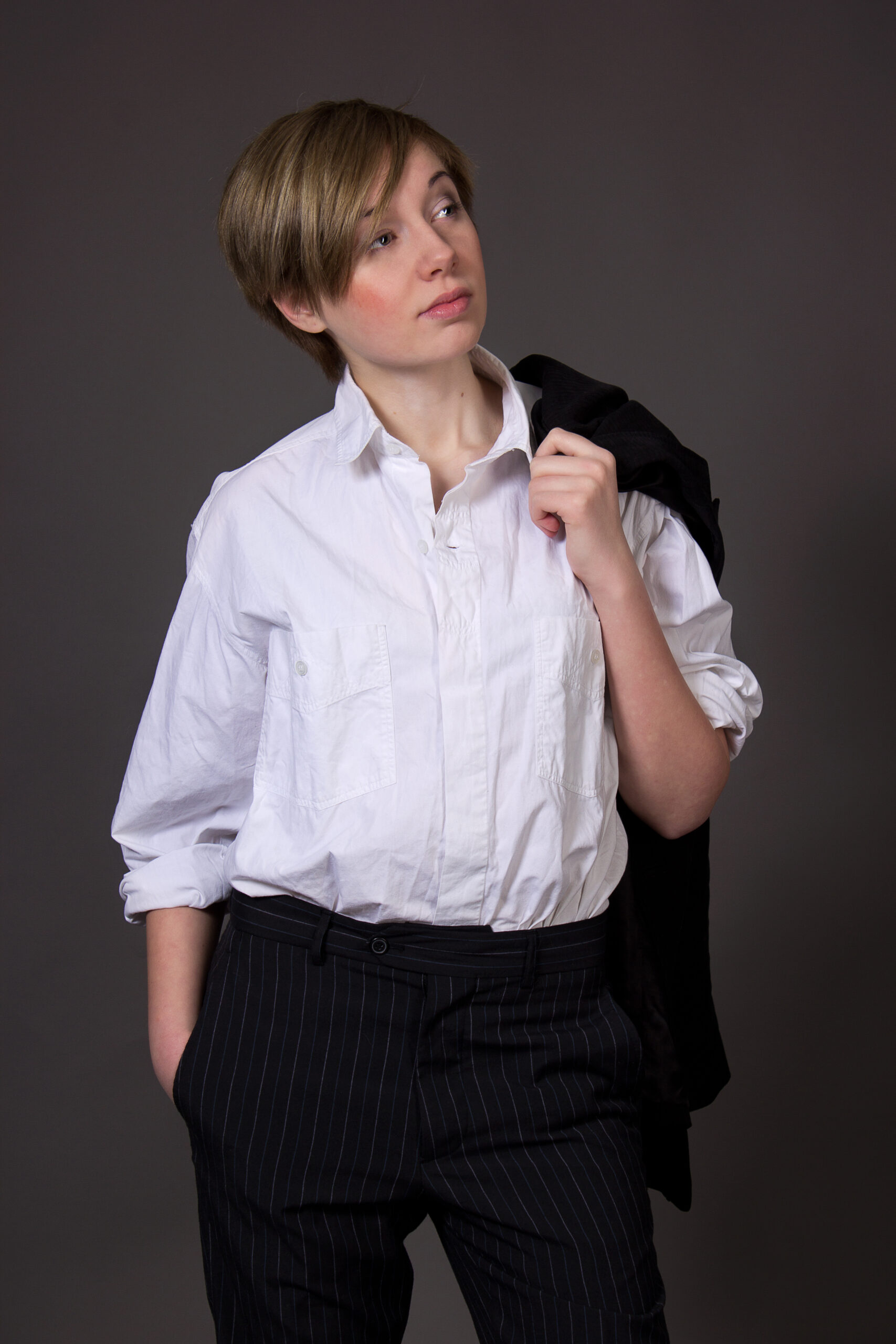
For a sharper-looking variation, keep the cuffs fastened and tuck the shirt fully. For a more relaxed dinner outfit, try the hem untucked with the sleeves folded back.
With crisp cotton: Try a full tuck, dark trousers and a simple necklace at the open collar.
With a softer shirt: Try a loose tuck or leave the hem free. Compare both before adding accessories.
Flat loafers, ballet flats or flat boots are all styling options here. Choose the pair you can comfortably wear for the walk, transport and standing involved in your evening.
If you already own a skirt with a sheen or interesting texture, you could substitute it for the trousers. That is an alternative, not an extra piece you need.
Practical check: Bend forward and sit in front of a mirror to check the neckline. Choose the opening that feels secure. For an event with a stated dress code, follow that requirement rather than assuming accessories make any shirt outfit suitable.

7. A worked example: build the five looks without five shopping lists
Imagine your existing wardrobe contains a white cotton button-up, blue jeans, dark trousers, a skirt, a tank, sneakers, loafers and a few accessories.
Here is how to apply the formulas:
| Look | Bottoms and footwear | Shirt adjustment | Optional finish |
|---|---|---|---|
| Casual | Blue jeans and sneakers | Untucked; cuffs folded back | Everyday crossbody |
| Open layer | Same jeans and sneakers, plus tank | Fully open; hem loose | Watch |
| Office | Dark trousers and loafers | Full tuck; cuffs fastened | Existing cardigan |
| Skirt outfit | Skirt and loafers | Full tuck or untucked after testing | Small earrings |
| Evening | Same dark trousers and loafers | Adjust neckline; choose your preferred tuck | Necklace or different bag |
This is a hypothetical wardrobe exercise, not a tested packing list. Substitute what you own: boots for loafers, a T-shirt for the tank, or trousers for the skirt.
If your one shirt is softer and draping rather than crisp cotton, repeat the same exercise. Pay particular attention to where the loose hem falls and whether you prefer the fabric tucked.
Take a quick photo of the combinations you like. Keep the successful versions as ready-made choices instead of recreating every decision the next time you get dressed.
8. Avoid the common mistakes—and finish with a care check
Forcing every shirt into every formula. If yours is too short to stay tucked, use the untucked options. If the buttons pull when closed, try it open over a suitable base layer.
Changing everything at once. Begin with the bottoms and shoes. Then adjust the hem, sleeves and accessories. This makes it easier to identify what you actually like.
Treating a tuck as mandatory. Compare tucked and untucked versions while moving, not just standing still.
Assuming “office appropriate” is universal. Ask about your workplace’s requirements, particularly before a first day, interview or client-facing event.
Using heat without checking the label. Follow the shirt’s washing, drying and ironing instructions, including warnings. FTC guidance explains that care labels must provide regular-care instructions and relevant warnings against damaging procedures. (ftc.gov)
Do not copy another garment’s routine just because the fiber sounds similar. For example, the specific silk shirt discussed earlier permits a cold, gentle machine wash and line drying; that is an instruction for that garment, not permission to machine-wash every silk shirt. (eileenfisher.com)
Before leaving, ask: Can I sit, reach and walk comfortably? Does the neckline stay where I want it? Is the hem behaving? Does this meet the occasion’s requirements? If so, you have a usable outfit—not merely a good mirror pose.